

FeaturesSSL certificates
HTTPS set up with the site, and renewed for you.
WPShift requests a free certificate once a site's domain points at the server, configures HTTPS and renews the certificate ahead of expiry. A failed renewal raises an alert naming the step that failed and what it reported.
Free plan available. Features vary by plan. Server costs are separate.
How it works
- Step 1
Issued once the domain resolves
Validation requires the domain to point at the server, so the certificate is issued as part of bringing the site online.
- Step 2
Renewed ahead of expiry
Renewal is attempted well before the certificate runs out, which leaves time to fix a problem rather than discover one.
- Step 3
Failures raise an alert
Each attempt records its steps and output, so a failed renewal comes with the reason attached instead of failing quietly.
The part that goes wrong is not being told
Automatic renewal is routine until something around it changes: a DNS record moved, a redirect intercepts the validation request, the domain changed registrar. WPShift records every renewal attempt step by step and raises an alert on failure, while the current certificate is still valid.
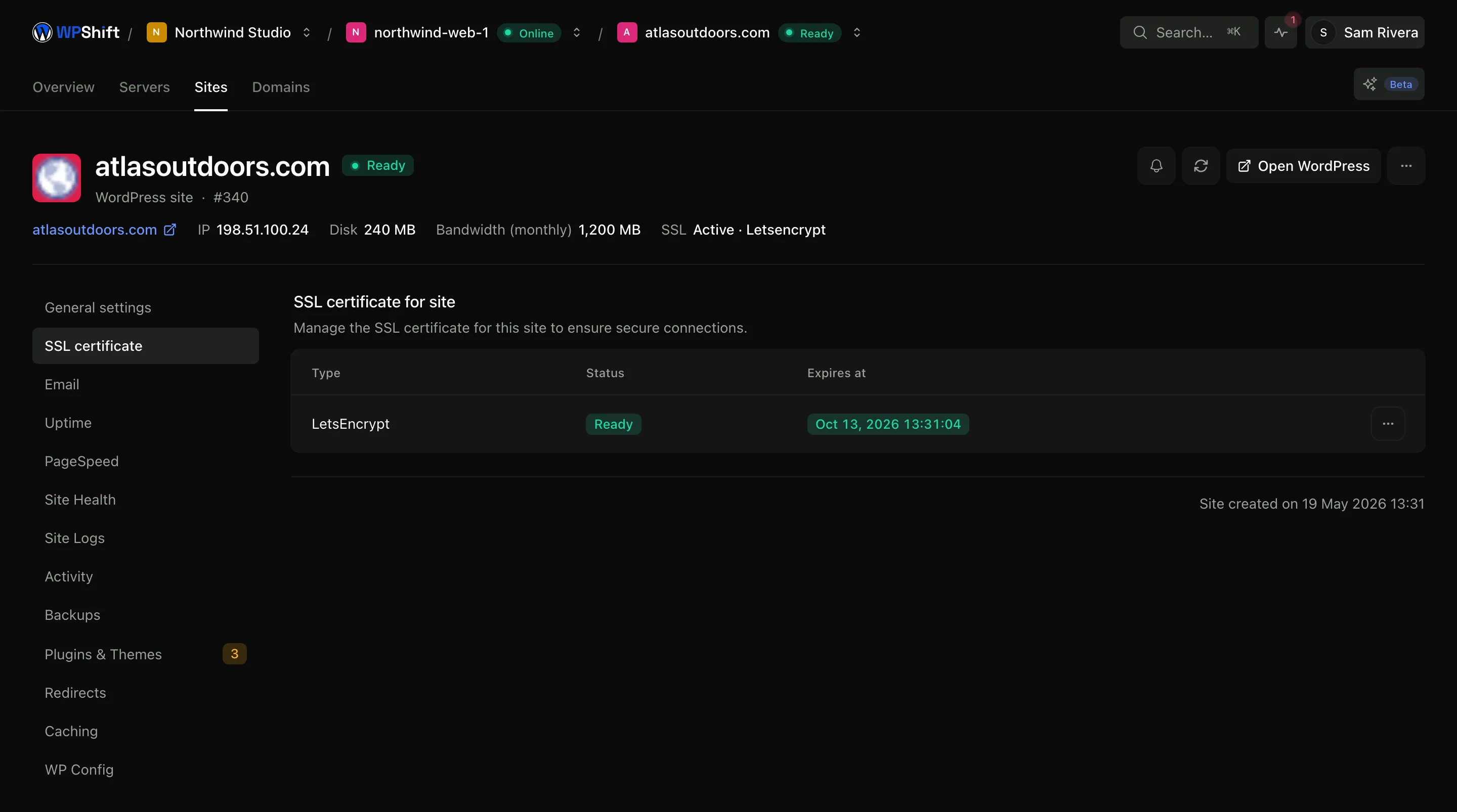
Covers the domain and its www form
A site's certificate covers both, so it does not matter which a visitor types, and requests to the insecure address are redirected to the secure one.
Install a certificate you already have
If a client arrives with a certificate they have bought, or your setup requires a specific one, install it on the site instead. Renewing a certificate obtained elsewhere stays with whoever issued it.
Fewer moving parts when DNS is here too
When WPShift manages the domain's DNS, the records validation depends on are already correct. That removes the most common reason issuing a certificate fails in the first place.
Common questions
Does SSL cost extra?
No. Certificate management is included on every plan. A certificate you buy from someone else is a separate cost.
What happens if a renewal fails?
You get an alert naming the step that failed and what it reported, while the current certificate is still valid. Missing DNS records and redirects that intercept the validation request are the usual causes.
Can I use a certificate I bought elsewhere?
Yes, through the site's SSL settings. It will not renew itself, because renewal stays with the provider you bought it from.
What about a subdomain like shop.example.com?
A subdomain that is its own site in WPShift gets its own certificate when the site is created.
Why has my certificate not been issued yet?
Issuing needs the domain to resolve to the server and the validation request to reach it. Check the DNS record, and check any proxy, firewall rule or redirect sitting in front of the site.
Keep reading
- Domains & DNSManage domain records alongside your sites, or keep DNS with your existing provider.
- Site managementInstall WordPress and manage plugins, themes, logs and hosting settings in one place.
- Security & firewallA default-deny firewall, managed SSH keys, and separate users and credentials per site.
- Staging & cloningCopy a site to test a PHP, plugin or theme change before touching the live version.
Set up your first WordPress server
Connect your cloud account, let WPShift prepare the server, and add a site.
Free plan available. Paid plans include a 7-day trial. Server costs are separate.